

❓ What is a PCIe 5.0 x16 riser cable?
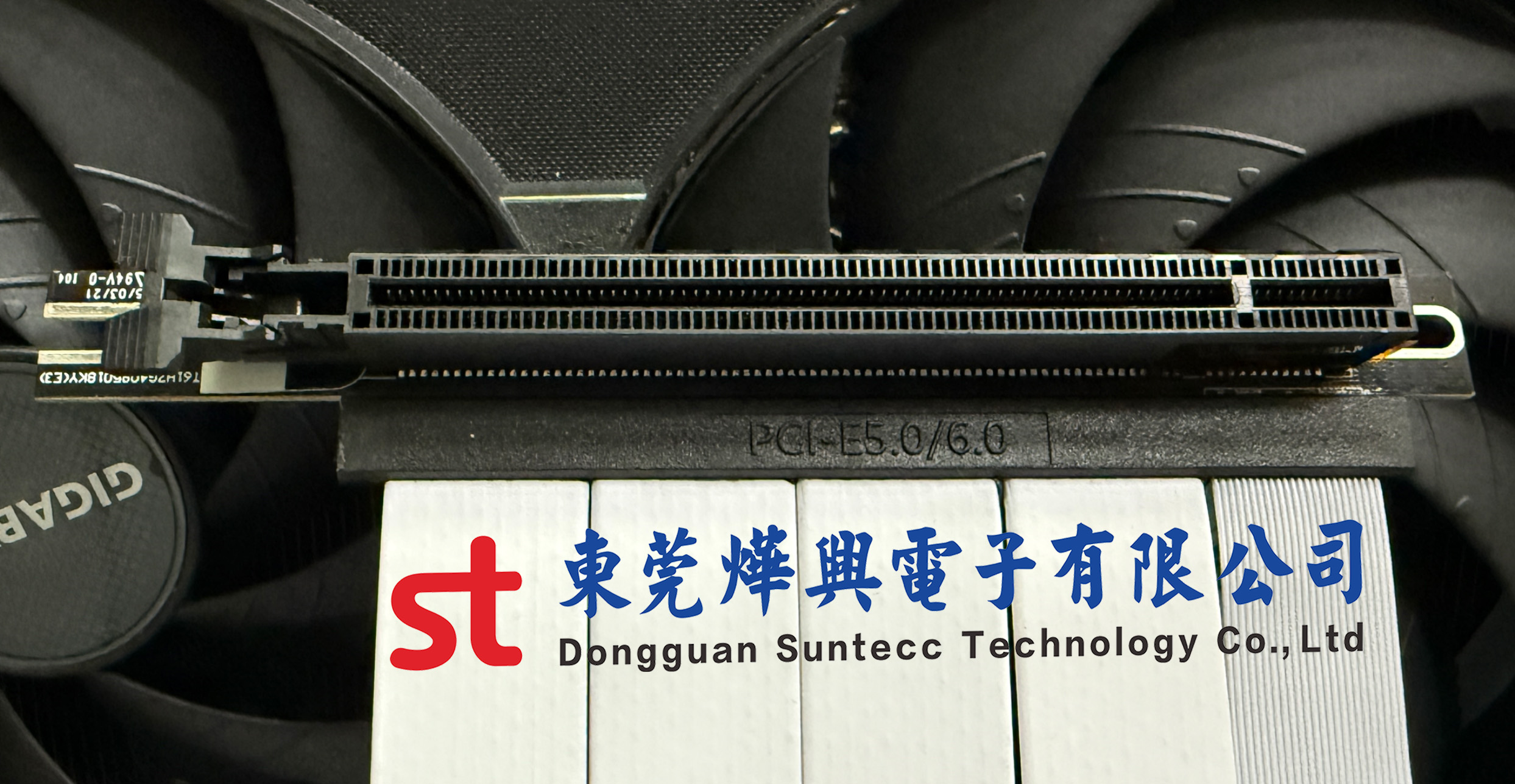
A PCIe riser cable is an extension cable that "extends" the PCIe slot on the motherboard, allowing the graphics card to be placed in a different position or mounted upright. PCIe 5.0 x16 indicates that this cable is designed to support PCIe Generation 5 (PCIe Gen5) and x16 lane speed/pin configuration.
🔌 What is the compatibility of a PCIe 5.0 x16 Riser Cable (adapter extension cable), can it be used with a PCIe 5.0 Riser and a PCIe 4.0 graphics card?
The compatibility of a PCIe 5.0 x16 Riser Cable needs attention to the following points:
- Physical interface and protocol compatibility: The PCIe 5.0 standard itself has downward compatibility. This means that PCIe 5.0 adapter cables can usually be used for PCIe 4.0 or earlier devices, but the device's speed will be limited by its own PCIe version.
- Board and device support: The premise of using a PCIe 5.0 x16 Riser Cable is that both your motherboard and the device you need to connect (such as a graphics card) must support PCIe 5.0. Not all motherboards and devices currently support PCIe 5.0.
- Signal integrity challenges: The high speed of PCIe 5.0 requires extremely high signal integrity. Low-quality or too long adapter extension cables may cause signal attenuation, data errors, or even device not recognized or performance degradation. Therefore, choosing high-quality cables is very important. We self-design multiple high-shielded cables and PCBs, all of which have passed strict signal integrity tests and comply with PCI-SIG specification standards.
- Potential issues: There have been reports that some graphics cards (such as NVIDIA RTX 5090) may experience compatibility issues when using PCIe adapters or extension cables, such as game errors or system blue screens. If you want to ensure Gen5 bandwidth and stability, you should use a Riser that is clearly marked to support PCIe 5.0. Some motherboards or BIOS/chipsets also have differences in actual Gen5 support, which may affect the final result.We can customize PCB layout and cable specifications according to different platform usage scenarios to meet various platform requirements.
⚡ Will using a PCIe 5.0 x16 Riser Cable cause performance loss?
In an ideal situation, using a high-quality and well-designed PCIe 5.0 x16 Riser Cable should not cause significant performance loss.
However, if the adapter cable is of poor quality, too long, or has insufficient shielding, it may introduce signal integrity issues, leading to performance degradation or instability. The risk of performance loss for gamers and DIYers comes more from the quality of the cable itself rather than protocol downgrade. We self-design multiple high-shielded cables and PCBs, all of which have passed strict signal integrity tests and comply with PCI-SIG specification standards. We provide protection for the needs of gamers and professional users.
💡 How to choose a PCIe 5.0 x16 Riser Cable?
When purchasing, you can pay attention to the following points:
- Confirm your needs: First, make sure whether your motherboard and device support PCIe 5.0.
- Choose a reliable brand and model: Prioritize brands with good reputation and professional technical background. For example, our company's PCIe Gen5 x16 extension cables (length and cable specifications can be flexibly customized) are mentioned to provide excellent signal quality. Also, test results show that adapter cards with full-length PCIe x16 slots may perform better in stability and compatibility.
- Pay attention to craftsmanship and heat dissipation: High-quality adapter cables usually use good shielding layers to reduce electromagnetic interference (we use self-designed high-shielded cables and have passed strict signal integrity tests). For devices such as M.2 adapter cards, metal heat sinks help ensure stable operation of high-speed SSDs at low temperatures.
- Pay attention to length: Under the premise of meeting installation requirements, try to choose shorter lengths, because longer cables usually mean a higher risk of signal attenuation.
🤔 Besides graphics cards, can PCIe 5.0 Riser Cables be used for other devices?
Yes, PCIe 5.0 Riser Cables are not limited to graphics cards. They can also be used for other devices that require PCIe 5.0 high-speed connections, such as:
- High-performance PCIe 5.0 NVMe SSDs: Install the SSD in a more flexible position through an adapter card.
- High-speed network adapters: such as 10G network cards or InfiniBand cards.
- Professional capture cards, computing cards, and other expansion devices that require high bandwidth.
❓ How long can a Riser cable be? Does the length affect it?
Theoretically, the shorter the better (it is easier to maintain signal integrity). Gen5 has low tolerance for signals and crosstalk, so length, shielding, cable material, and connector design will significantly affect usability. We offer different lengths (e.g., 50–300mm), and custom long-length cables can consult us for feasibility design schemes.